P01Runnable
AI Provider Gateway
Provider abstraction, streaming, structured outputs, and trace-aware model access.
TypeScript, Express, Zod
Agentic Engineering Playbook teaches real AI agent engineering through six runnable projects covering LLM gateways, RAG, orchestration, MCP-style tools, operator UI, and browser agents.
Generate a secure travel copilot for finance.
Break work into gateway, RAG, approval, and QA steps.
Pull policy context and prior incident examples.
Fetch internal docs and repo metadata through safe tools.
Pause on sensitive actions and capture operator reason.
Check grounding, latency, and execution quality before release.
run agent --mode orchestrate --env testFinal answer
Gateway selected, RAG citations attached, approvals enforced, and QA run staged for release confidence.
This is a buildable curriculum, not a notes dump. Every project is scoped to teach one production-shaped system with local validation and a clear upgrade path.
Provider abstraction, streaming, structured outputs, and trace-aware model access.
TypeScript, Express, Zod
Chunking, retrieval, citations, grounded answers, and eval-first search quality.
TypeScript, Express, JSON storage
State machines, approvals, retries, tool routing, and inspectable traces.
TypeScript, Express, workflow runtime
Safe read-only tools, schemas, resources, and audit logging for enterprise agents.
TypeScript, Express, MCP-style APIs
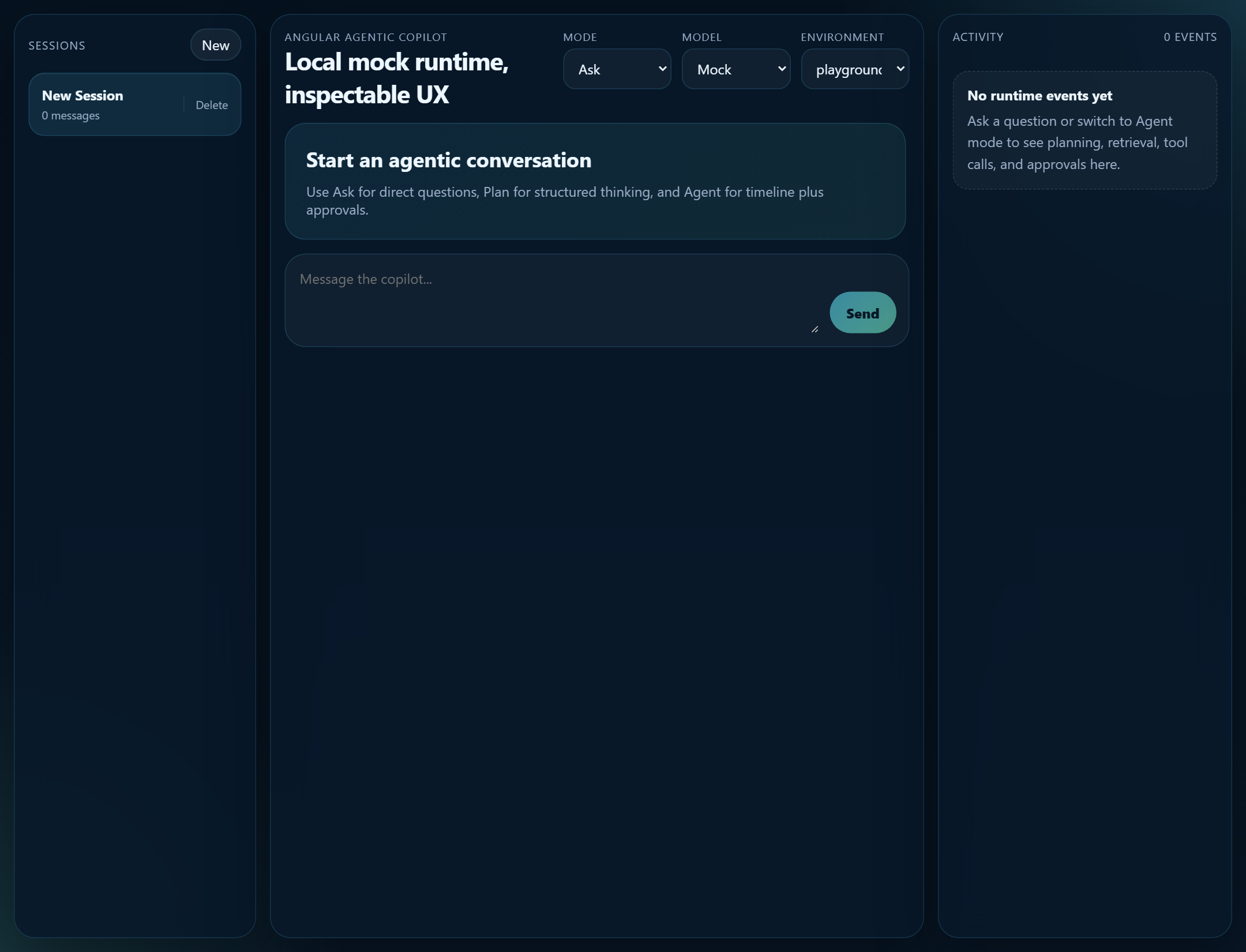
Operator UX, session state, streaming UI, approvals, and visible agent activity.
Angular, TypeScript, local mock runtime
Safe browser automation, evidence capture, dry-run policy, and deterministic QA evals.
TypeScript, Playwright, Express
The path is intentionally cumulative: each project becomes infrastructure for the next layer of agent capability.
Every layer is tied to a runnable system so learners move from reading to implementation quickly.
The projects emphasize boundaries, validation, traces, and upgrade paths instead of toy demos.
Projects ship with smoke checks, eval flows, or build validation so quality is part of the curriculum.
Plans, approvals, tool activity, and browser evidence are surfaced as operator-facing product behavior.
Read-only tools, dry-run policy, approvals, and environment controls are treated as first-class patterns.
The sequence is designed to produce public work samples that show system thinking, not just prompt experiments.
UI, orchestration, retrieval, tools, browser automation, and model access are taught as connected layers instead of isolated demos.
These screenshots come from the local production docs build, the Angular copilot UI, and the QA Browser Agent report flow. Walkthrough GIFs are still a follow-up asset.
Dry run generated a deterministic QA plan for mock://homepage without launching a live browser session.
The repo is designed to support open-source contribution, practical chapter writing, weekly shipping momentum, and portfolio-quality project submissions.
Propose a new curriculum page with examples, diagrams, exercises, and project tie-ins.
Open the chapter guideShip one practical improvement per week and turn the repo into a consistent proof-of-work engine.
See the challenge formatPitch a runnable project that extends the academy into new agent, UI, eval, or platform territory.
Use the submission templateIt helps developers show architecture judgment, implementation range, and production awareness across multiple AI system layers.
Evidence of agent architecture thinking, not just prompt experimentation.
Runnable projects covering copilots, RAG, MCP, observability, and UI workflows.
Public documentation that shows tradeoff thinking and collaboration readiness.